India Census 2027 First Phase to Start from April 1 Check 33 Questions List

Census 2027: The Central Government has officially kicked off preparations for the Census of India 2027. Acting under the Census Act of 1948, the Office of the Registrar General of India, under the Ministry of Home Affairs, has released a new notification detailing the roadmap for this massive exercise. This upcoming census will see significant updates in data collection methods and the range of questions asked.
Here is a comprehensive breakdown of the timeline, the process, and the list of 33 questions you will need to answer.
Census 2027 Timeline and Methodology
According to the notification, the first phase of the Census is scheduled to begin on April 1st of this year and is expected to conclude by September. The entire exercise is divided into two primary phases:

- Phase 1: House Listing and Housing Census (Focusing on the structure, amenities, and assets).
- Phase 2: Population Enumeration (Headcount and personal details).
Hybrid Mode of Data Collection:
A major shift in the 2027 Census is the introduction of digital options. While government officials (enumerators) will visit households physically to collect data, citizens will also have the option of ‘Self-Enumeration’. A 15-day window will be provided for individuals to fill in their data online through a designated portal.
The 33 Questions: What Will You Be Asked?
The questionnaire for the House Listing phase has been expanded from 29 questions in 2011 to 33 questions in 2027. New queries regarding digital connectivity and dietary habits have been included to reflect modern Indian lifestyles. The questions are categorized as follows:
1. Housing Structure and Condition
- Building Number and Census House Number.
- Material used for the floor, walls, and roof (e.g., burnt brick, mud, concrete, tin, asbestos).
- Current condition of the house and its specific usage (Residence only, residence-cum-shop, etc.).
- Ownership status (Owned or Rented).
- Number of dwelling rooms exclusive to the household.
2. Household Demographics
- Household Number.
- Total number of persons residing in the household.
- Name of the Head of the Household.
- Sex of the Head of the Household.
- Caste category of the Head (SC, ST, OBC, or General).
- Number of married couples living in the household.
3. Amenities and Basic Services
- Main source of drinking water and its availability (within premises or outside).
- Availability of electricity connection.
- Availability and type of latrine/toilet facility.
- Connectivity to a drainage system for wastewater outlet.
- Availability of a separate bathing facility.
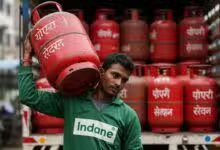
- Availability of a kitchen and LPG/PNG connection.
- Main fuel used for cooking (Firewood, coal, gas, etc.).
4. Assets and Technology
- Possession of Radio/Transistor and Television.
- Access to the Internet.
- Possession of Laptop/Computer and Mobile phone/Smartphone.
- Ownership of vehicles: Bicycle, Scooter/Motorcycle/Moped, or Car/Jeep/Van.
5. Other Key Details
- Main Cereal consumed by the household (A new addition to track dietary patterns).
- Mobile Number for communication purposes.
Conclusion
The Census is a critical tool for national planning and resource allocation. Accurate data helps the government formulate effective policies for housing, health, and infrastructure. Citizens are urged to cooperate with enumerators and provide precise information, either during the house visits or via the self-enumeration portal.
